3rd Global Summit on
Recycling and Waste Management
THEME: "Exploring the Novel Advances in Recycling and Waste Management"
 24-25 Mar 2027
  Paris, France
 THEME: "Exploring the Novel Advances in Recycling and Waste Management"
24-25 Mar 2027
Paris, France 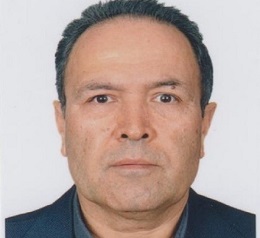
University of Wisconsin, United States
Title: From Separation to Circularity: Smart Technologies, Artificial Intelligence, and Advanced Polymer Recycling
Dr. Saeed Ostad Movahed is a tenured Associate Professor of Polymer Engineering at the Faculty of Science, Ferdowsi University of Mashhad, Iran, where he has served since 2012. He earned his Ph.D. in Chemical (Polymer) Engineering from Loughborough University, UK, with research focused on the development of advanced tire tread materials using silanized silica nanofillers. He also holds an M.Sc. in Chemical (Polymer) Engineering from the Indian Institute of Technology Roorkee, India, and a B.Sc. in Chemical Engineering from Isfahan University of Technology, Iran.
Dr. Ostad Movahed has more than 14 years of teaching experience at undergraduate and graduate levels, offering courses in polymer science and engineering, industrial chemistry, heat transfer, fluid mechanics, corrosion, and polymer recycling. He also served as an Honorary Associate at the Polymer Engineering Center, University of Wisconsin–Madison, USA, during 2023–2024. His research interests include polymer engineering, polymer nanocomposites, tire technology, polymer recycling, and sustainable polymer materials.
The production of polymers has gone up exponentially in the last few decades with numerous benefits to human life; however, the massive amount of waste in the form of used polymers has turned into one of the biggest environmental issues of the 21st century. Although recycling technologies have evolved significantly, a minute portion of the post-consumer polymer waste is being recycled into high value-added products. The primary reason refers to this point that the available polymers in a polymer waste stream has not been sufficiently separated from each other causing the recycling process uneconomically. A change to a truly circular polymer economy requires a paradigm shift and a completely new intelligent, integrated, and high-tech system for the recycling of polymers that goes above and beyond the currently practiced forms of recycling.
This keynote presentation will cover future strategies for the polymer recycling sector and present recent developments aimed at creating a truly complete closed-loop for the materials. Successful recycling starts with effective and efficient separation of high purity materials, and this affects both the technical, environmental and economical aspects of subsequent stages of mechanical, chemical and feedstock recycling. Latest developments in density-based, triboelectric, dissolution, flotation, microwave-assisted and hybrid-type of separation technologies for conventional as well as for high-performance engineering plastics will be presented. These are aimed at efficient recycling of complex mixed polymer waste.
The presentation describes novel approaches to the recycling of cross-linked elastomers by means of advanced devulcanization technologies. The mentioned approaches are by means of Thermo-Mechanical, Chemical, Microwave-Assisted Devulcanization as well as by environmentally friendly methods to preserve the polymer chains in their integrity while cleaving the sulfur crosslinks. Thus, waste tires as well as other industrial waste from rubber can be recycled in a high-value way within a closed loop of a circular economy.
An increasing number of companies are now applying Artificial Intelligence (AI) in the recycling of polymers. This aspect will also be a main focus for us in the future. This includes optical sorting with AI, robotic identification of materials, process optimization by means of machine learning as well as the digitalization of recycling processes using intelligent Material Recovery Facilities (MRFs). In the future, waste management is no longer merely a labor-intensive activity and is instead increasingly being turned into fully-automated processes and into business models that are driven by huge amounts of data and which are designed to increase the recycling rate as much as possible and to produce high-quality recyclates in the process.
The presentation will go beyond presentation of several technologies and show how Life Cycle Assessment (LCA) and Techno-Economic Analysis (TEA) can be combined in order to enable decision makers to judge not only environmental effects and sustainability of a production system, but also cost-effectiveness for industry. In addition, the presentation will give a short overview on eco-design, Extended Producer Responsibility (EPR), digitalization as well as on international policies and instruments supporting the transition towards more circular production systems for polymers.
Future perspectives on recycling of polymers will be presented. This includes bio-based recycling, enzymatic depolymerization of polymers, smart materials, no microplastics and recycling in AI-driven closed-loop production systems.
In brief, the lecture introduces an integrated approach consisting of separation technologies, intelligent process control, AI support, and design for recyclability for the reuse of waste as secondary resources for sustainable development and for competitiveness of industry.
