3rd Global Summit on
Recycling and Waste Management
THEME: "Exploring the Novel Advances in Recycling and Waste Management"
 24-25 Mar 2027
  Paris, France
 THEME: "Exploring the Novel Advances in Recycling and Waste Management"
24-25 Mar 2027
Paris, France 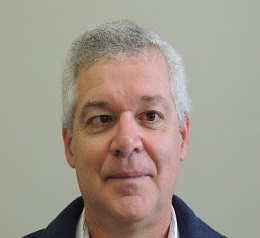
Federal University of Santa Catarina, Brazil
Title: Valorization of Polymeric Waste from Selective Collection through Incorporation into High-Performance Concrete
Adilson Pinheiro: Civil Engineer (Federal University of Santa Catarina, 1985) and holder of a doctorate from the Institut National Polytechnique de Toulouse, France (1995). Professor in the Department of Sanitary and Environmental Engineering at the Federal University of Santa Catarina (UFSC).
The increasing generation of municipal solid waste (MSW) and the limitations of recycling systems in Brazil pose significant challenges to environmental management and the consolidation of circular economy models in South America. Although selective waste collection enables the recovery of materials with recycling potential, a portion of the collected materials remains without technically or economically viable alternatives and is therefore sent to landfills. In this context, this study evaluated the potential for valorizing polymeric waste generated during the final stage of the selective collection process in the municipality of Blumenau, Santa Catarina, Brazil, through their incorporation into high-performance concrete. This approach aims simultaneously to reduce landfill disposal and assign a new function to these materials within the productive chain. The research was conducted experimentally, involving the selection, preparation, and characterization of the polymeric waste, followed by their incorporation into a cementitious matrix. The characterization identified polycarbonate (26.14%), high-density polyethylene (HDPE) (21.12%), and low-density polyethylene (LDPE) (13.25%) as the main components of the sample. After physical processing, the reject material was reduced to a particle size of 2.00 mm and incorporated into the concrete at a dosage of 3 kg/m³. Different water-to-binder ratios (0.25, 0.35, and 0.45) were investigated, using reference concrete and concrete containing polypropylene fibers for comparison. The specimens were exposed to temperatures of 23, 200, 400, and 600 °C, after which their physical, mechanical, and microstructural properties were evaluated. The results showed that the incorporation of the polymeric rejects did not adversely affect concrete workability in the fresh state. In the hardened state, the material exhibited satisfactory performance and contributed to mitigating spalling, with performance comparable to that observed for polypropylene fibers. At room temperature, compressive strength showed a maximum reduction of approximately 3% compared with the reference concrete, whereas at 600 °C the reduction reached approximately 25%. Tensile strength decreased by approximately 18% at room temperature; however, from 400 °C onwards, the concrete containing polymeric rejects exhibited superior performance compared with the reference concrete. The elastic modulus also showed moderate reductions, while capillary water absorption results were similar to those of reference concrete. The findings indicate that incorporating polymeric waste into high-performance concrete may represent a technically feasible alternative for their valorization, contributing to reducing the amount of material disposed of in landfills and promoting their reintegration into the construction industry’s productive chain.
